
The land of extraordinary creatures
Meet the wildlife that makes Australia remarkable.
At sunrise, a kookaburra’s call rolls across the bush. A kangaroo bounds over the red earth, and a koala rests among eucalyptus branches. Beyond these familiar sights lives an even stranger cast: an egg-laying mammal with a sensitive bill, a tiny gliding marsupial, a lizard that channels water along its scales and a bird that can imitate sounds from the world around it.
Australian animals thrive in remarkably different environments. The cool eucalypt forests of the south, warm northern wetlands, sprawling inland deserts, tropical rainforests and sheltered islands all create opportunities—and challenges—for wildlife. Understanding their adaptations is a way of appreciating how connected every species is to its surroundings.
Our Australian Animals Quiz is a self-guided wildlife expedition with 25 original multiple-choice questions. Explore five habitat zones, collect ranger points, earn a playful field-guide title and discover a new animal fact with every answer.
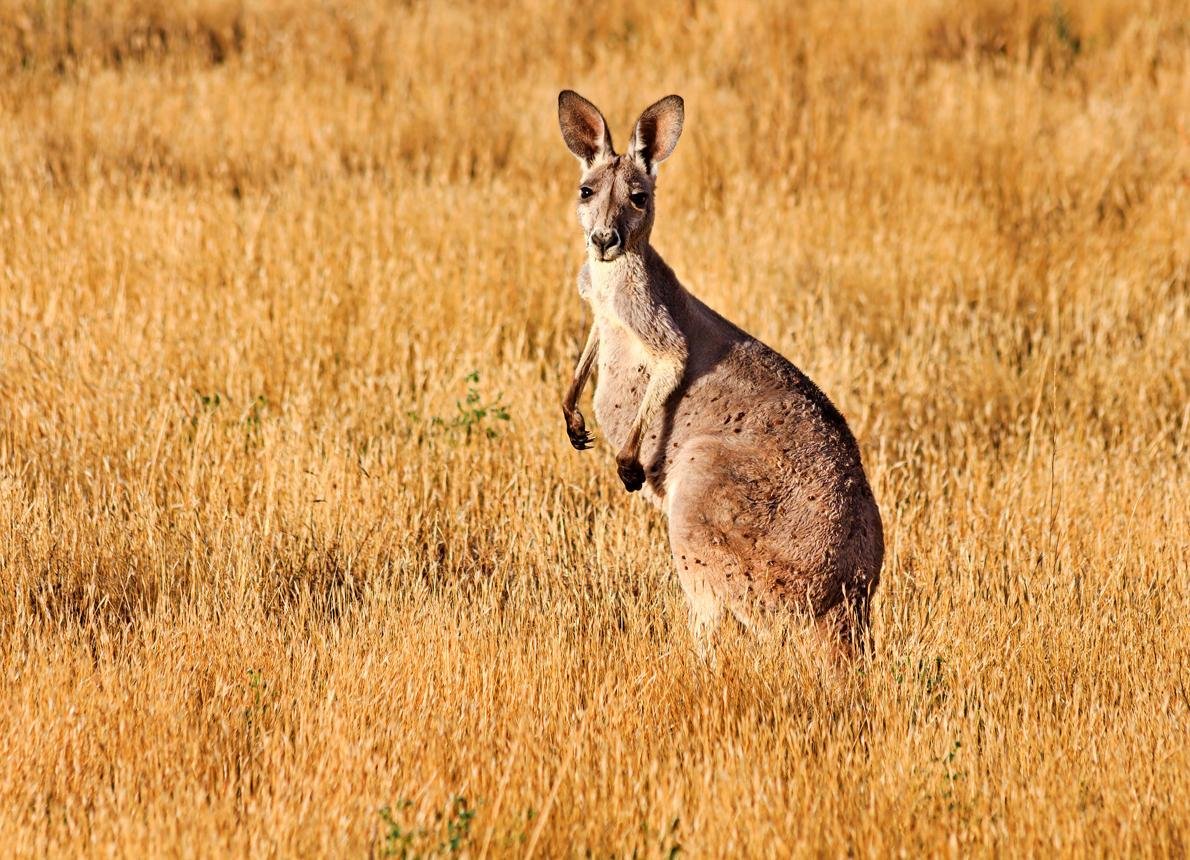
Every habitat holds a new discovery.
Questions across 5 habitats
For each correct answer
Maximum ranger score
Moonshadow • Ranger field guide
The Wild Australia Challenge.
Follow a five-stop trail through the Australian landscape. Pick one answer for each question, track your progress and uncover your wildlife rank at the finish.
Ready for the wildlife trail?
Explore five habitats with five questions each. Earn 4 ranger points for every correct answer, collect wildlife tracks and unlock a ranger rank. Your score is revealed only when your expedition is complete.
The 7-minute expedition clock starts with your first answer and never auto-submits.FIELD NOTE / EUCALYPT FOREST
QUESTION 01 / 25
Show an answer clue
Ranger passport completed
Bushland Beginner
Answers & explanations
Expand each field note to compare your answer with the correct one and read an interesting wildlife insight.
Take your field notes further
Wildlife is an adventure in adaptation.
From unusual biology to life-saving habitats, Australia’s animals give us plenty to learn about the natural world.
Not every mammal is born alike
Australia is famous for marsupials such as koalas, wallabies and wombats, whose tiny young continue developing after birth. Yet the platypus and echidna follow another path: they are monotremes, mammals that lay eggs. The differences show how varied mammal evolution can be.
Adaptations written in the landscape
Wombats have backwards-facing pouches for burrowing, sugar gliders use a membrane to glide between trees, and the thorny devil channels moisture towards its mouth along tiny grooves in its skin. Each adaptation answers a challenge posed by the animal’s surroundings.
Protecting the living bush
Native wildlife depends on connected habitats, functioning food webs and protection from major threats. Introduced predators, habitat loss and other pressures have harmed many species. Wildlife research, conservation reserves and responsible behaviour all help support recovery.
What makes Australian animals so unusual?
Geographic isolation shaped many of Australia’s distinctive life forms, but the story is not simply about unusual creatures. It is about ecological roles. Numbats help regulate termite populations, bilbies turn over soil as they forage, and flying-foxes move pollen and seeds between flowering and fruiting trees. Their ordinary daily activities can shape entire habitats.
Birds and reptiles add even more diversity. Emus are powerful runners. Cassowaries move through wet tropical forests, helping scatter seeds from the fruit they eat. Freshwater crocodiles occupy rivers and billabongs, while thorny devils make use of the sparse moisture available in the desert. The best wildlife trivia explores not only what an animal looks like but also why it behaves the way it does.
Visiting a national park or coastal reserve offers the opportunity to observe native wildlife. Keep a respectful distance, avoid feeding wild animals and follow local guidance. Wildlife is at its most fascinating when it can behave naturally in its own habitat. You can enjoy this Australian Animals Quiz with family or friends, and use the explanations to discover which facts you would like to explore more deeply.
Frequently asked questions
Is this Australian Animals Quiz free to play?
Yes. The 25-question challenge is free, requires no account, and displays your score and explanations at the end.
How are points and wildlife ranks calculated?
Each correct answer is worth 4 points. With 25 questions, the maximum score is 100. You receive an Australian wildlife rank based on your points and a separate streak award for consecutive correct answers. The clock is for fun only and never submits answers automatically.
Can I revisit a question before I finish?
Yes. The Previous button allows you to change an answer. The Next button becomes available once you choose an answer to the current question.
What subjects are covered?
The quiz covers mammals, birds, reptiles, amphibians, habitats, conservation and animal adaptations across five Australian habitat zones.