A closer look at our closest neighbour
The night sky has a story.
Some nights it hangs over the horizon like a pale lantern. On others, only a fine crescent peeks through the clouds. The Moon has inspired calendars, legends, explorers and scientists, yet the quiet world above us still has the power to surprise.
In this original Moon Quiz, you will travel from the basics of moonlight to the mechanics of lunar phases, the secrets of cratered landscapes and the extraordinary story of human exploration. Every answer brings a little more of our nearest celestial neighbour into focus.
There are 20 multiple-choice questions across four mission chapters. Earn five points for every correct answer, gather mission seals and see whether you qualify as a Lunar Legend. You can revisit earlier questions, reveal optional clues and read the complete explanations once you finish.
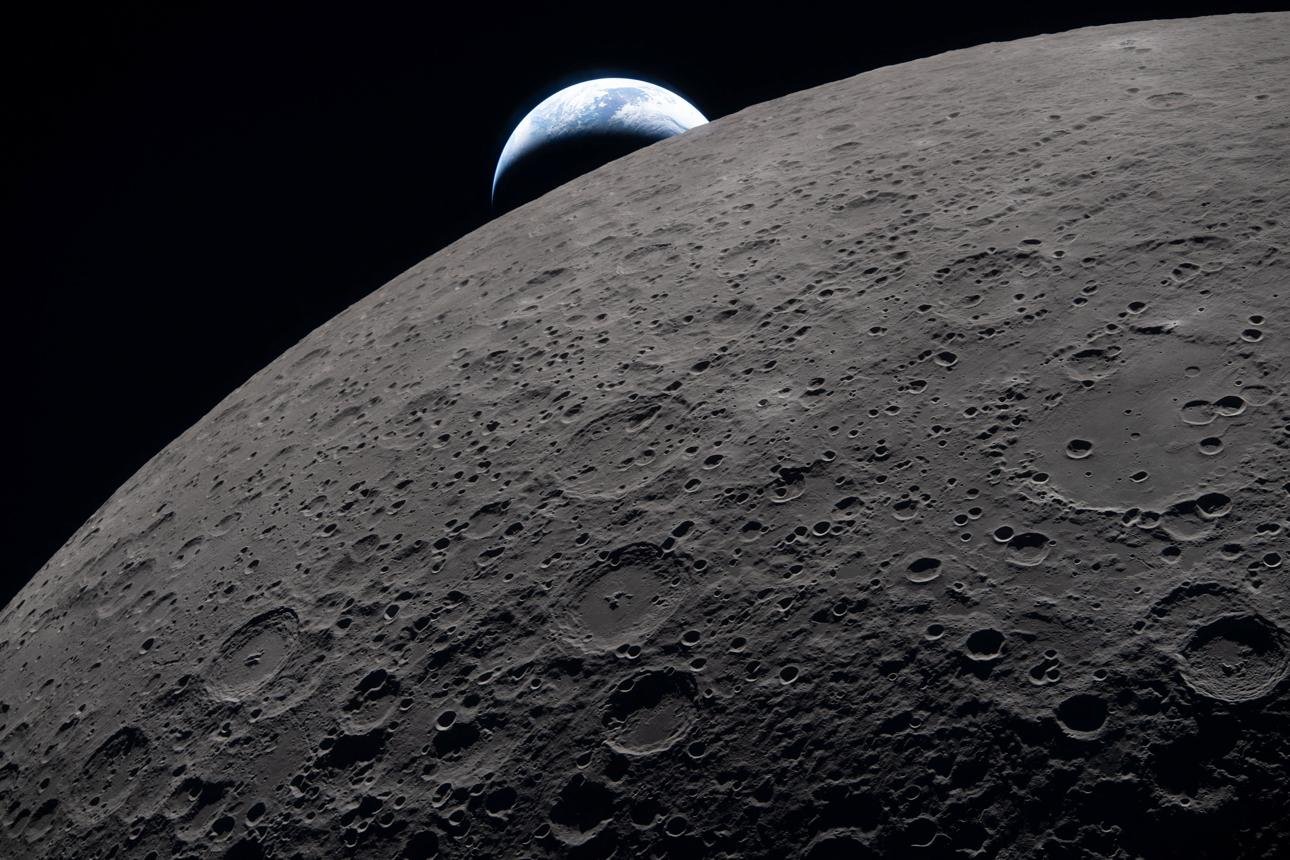
Discover the lunar world.
Look closer at the familiar.
Why does the Moon seem to change shape? What is hidden in its dark plains? The best lunar questions begin with sights you have already seen above your own rooftop.
Think like an explorer.
The challenge moves from simple observations to the science behind the scenery. Take your time, choose carefully and turn every unfamiliar fact into something worth remembering.
Moonshadow Mission Control / Flight 01
The Lunar Challenge.
Twenty questions. Five points for each correct answer. Mission seals for strong chapter scores. Your clock starts after the first answer, but it will never submit your quiz automatically.
Pre-flight check complete
Your mission starts here.
Travel across four lunar chapters, answer 20 astronomy questions and earn up to 100 points. Your five-minute challenge timer starts after your first selection, and you remain in control even after it reaches zero.
Transmission 01 / 20
✧ Reveal a mission hint
Mission complete / Your flight report
Lunar Legend
Answers & explanations
Open each mission note to compare your answer with the correct explanation.
The Moonshadow field notebook
A world worth looking up to.
Every phase, shadow and rock has a story. Use these short field notes to connect the quiz with what researchers have learned from telescopes, spacecraft and returned lunar samples.
01 / Light & shadow
The changing face of the Moon
The Moon does not create its own visible glow. Its surface reflects sunlight, and the portion illuminated from our viewpoint changes as it travels around Earth. A full phase cycle takes about 29.5 days, while one orbit relative to distant stars takes closer to 27.3 days. These periods differ because Earth and the Moon are moving around the Sun together. The phases form a predictable pattern, not a random nightly transformation.
02 / The lunar landscape
Mountains, basins and ancient scars
Under a telescope, the Moon is far from smooth. Impact craters mark the surface, bright highlands rise above darker plains, and fine regolith blankets the ground. Those large dark areas, known as maria, formed when molten rock filled enormous ancient impact basins. Because the Moon has little atmosphere or weather, many of these features have endured for immense spans of geological time.
03 / A gravitational partnership
The Moon’s influence reaches Earth
Although the Moon is far away, its gravitational influence matters deeply to our world. Its pull is the main driver of ocean tides, with the Sun contributing too. Earth and Moon are also linked by tidal interactions over enormous timescales. Looking from Earth, the same lunar hemisphere stays mostly in view because the Moon rotates once on its axis for each orbit around us.
04 / A new era of discovery
Footprints and frozen clues
Apollo 11 brought people to the lunar surface in July 1969, turning generations of distant observation into direct human exploration. Spacecraft have continued mapping the terrain and investigating its chemistry. Among the important discoveries is evidence of water ice in extremely cold, permanently shadowed areas near the poles. Even a familiar Moon still holds questions that scientists are working to answer.
The perfect quiz for curious night-sky watchers
You do not need specialist astronomy equipment to begin learning. Observe the Moon at roughly the same time on different nights and note its changing shape and position. Sketch the bright and dark patches you can see, look up a trustworthy lunar map and compare what you notice with the patterns described in the field guide.
Good quiz questions reward understanding, not only memorisation. Knowing that the Moon is a natural satellite is a beginning; connecting its orbital motion to phases, gravity and eclipses reveals a much more interesting picture. That is why each question in this challenge comes with an explanation rather than just a score.
Use the Moon Quiz as a friendly challenge at home, in a classroom or with friends. At the finish, revisit the questions you missed and turn one new fact into a fresh observation the next time you look up.
Learn more: NASA Moon facts · NASA lunar phases · NASA lunar eclipses · Apollo 11
Frequently asked questions
How many questions are in the Moon Quiz?
There are 20 original multiple-choice questions across four lunar mission chapters, with four options per question.
How does the 100-point scoring system work?
Every correct answer earns five points. A score of 50/100 or higher passes the challenge. Chapter mission seals and streak awards are separate achievements and do not change your points.
Can I change my answer?
Yes. Use the Previous button to return to earlier questions. Answers are saved and are not final until you finish.
Does the timer end my quiz automatically?
No. The five-minute clock begins with your first answer and stops at zero. You may still finish manually and receive your score.
When can I see the correct answers?
After finishing, open the Answers & Explanations section under the results to read each answer and its supporting fact.