An adventure through the centuries
Every horizon hides a story.
Long before digital maps and satellite signals, sailors ventured beyond familiar coastlines using the stars, the movement of the sea and instruments crafted to solve difficult problems. Their journeys connected communities, transformed trade and produced countless stories of ingenuity, discovery, hardship and change.
This Maritime History Quiz invites you to explore those stories through 20 original multiple-choice questions. Meet explorers and scientific voyagers, recognise celebrated sailing ships and discover how canals reshaped global navigation. Each answer comes with a short historical explanation, so the challenge is also an opportunity to learn.
From traditional Pacific wayfinding to shipwrecks near Australia, maritime history is not only a record of captains and vessels. It also includes the people already living along the shores where foreign ships arrived, the knowledge handed down between generations and the lasting consequences of encounters across the seas.
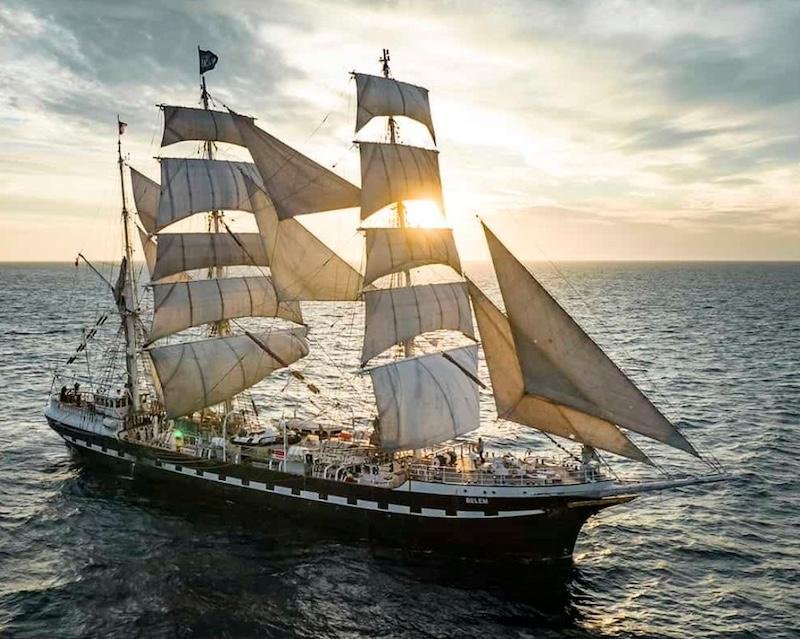
Captain’s Chart Room • Interactive trivia
Your voyage begins here.
Navigate four chapters of maritime history. Select an answer, follow the chart and collect voyage seals along the way. Every correct answer is worth five chart points.
Your captain’s briefing
Ready to set sail?
There are 20 questions across four chapters: navigation, exploration, famous vessels and global waterways. The five-minute clock starts only after your first answer. You can move backward to adjust your selections, and the quiz will never submit itself when time runs out.
Pass at 50 points • 5 points per correct answer • All answers explained after you finish
QUESTION 01 / 20
+ Open captain’s clue
Captain's log completed
Master Navigator
+ Answers & Explanations (20 questions)
Read and discover
A short guide to maritime history
How sailors found their way before GPS
Imagine travelling across an ocean with no coastline in sight. Navigation becomes a combination of observation, mathematics and practical experience. A compass can show direction; a sextant can help determine a celestial angle; a nautical chart marks hazards and water depths. Accurate timekeeping also became vital to calculating longitude at sea. John Harrison’s experimental marine timekeepers helped solve a problem that had frustrated generations of European navigators.
Not all seafaring cultures used the same methods. Across the Pacific, navigators passed on sophisticated knowledge of stars, sea swells, winds and animal behaviour. These systems supported ocean journeys long before European instruments arrived in the region. Studying them reminds us that maritime knowledge developed in many parts of the world.
Voyages that changed what people knew
Exploration ships served many purposes: commercial ambition, navigation, military expansion and scientific research. On HMB Endeavour, James Cook’s voyage of 1768–1771 combined scientific work with British imperial aims. In 1769 the crew observed the transit of Venus from Tahiti, while the voyage later brought Endeavour along Australia’s east coast, where Aboriginal peoples had lived for thousands of years. Understanding both shipboard and shore-based perspectives is essential to telling this history responsibly.
Another famous research journey began in 1831 when Charles Darwin sailed aboard HMS Beagle. He studied landscapes and living things during a long surveying expedition. His work illustrates how ships could function as moving laboratories, carrying scientists and new observations between continents.
Shipwrecks as underwater historical records
Wrecks are more than dramatic episodes. Their surviving timbers, equipment and cargo offer clues about engineering, trade, living conditions and safety. Sweden’s Vasa sank in 1628 on its maiden voyage; its recovery later provided historians with an exceptionally detailed view of a seventeenth-century warship. The Batavia wreck of 1629, off Western Australia, tells a very different story about Dutch trading networks, navigational hazards and violence among survivors.
The loss of RMS Titanic in 1912 remains a powerful example of the human consequences of a maritime disaster. Historical investigations and wreck exploration have helped shape discussions of safety, technology and collective memory.
How canals changed world trade
Two artificial waterways transformed routes between distant ports. The Suez Canal opened in 1869, joining the Mediterranean Sea with the Red Sea. The Panama Canal began official transit operations in 1914, offering an Atlantic-to-Pacific shortcut. Such achievements came with large economic and environmental effects and depended on extensive human labour. Maritime history includes those workers and communities as well as the celebrated ships.
To make the most of this quiz, use the answer explanations as short field notes. Remember one new date, investigate one vessel or explore an interactive museum collection. The purpose of a good history quiz is not simply to identify the correct option—it is to become more curious about why events happened and whose experiences they changed.
Explore reliable histories: Royal Museums Greenwich: Harrison and longitude · National Museum of Australia: Endeavour voyage · WA Museum: Batavia · NOAA: Titanic · Suez Canal Authority: canal history.
Frequently asked questions
How many questions are in the Maritime History Quiz?
There are 20 original multiple-choice questions, divided into four five-question chapters on navigation, exploration, famous ships and world routes.
How do I earn a maritime rank?
Each correct response earns five chart points. Your final score out of 100 determines your maritime rank; a score of at least 50 passes.
Can I return to change an answer?
Yes. Your choices remain selected as you move backward or forward. Your score is calculated only when you finish the twentieth question.
What happens when the timer reaches zero?
The clock stops but does not automatically submit, restart or refresh the quiz. Finish at your own pace using the Next and Finish buttons.
When do I see the correct answers?
After submitting the quiz, open Answers & Explanations below the results. Each item explains the historical fact behind the correct answer.